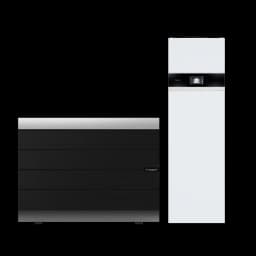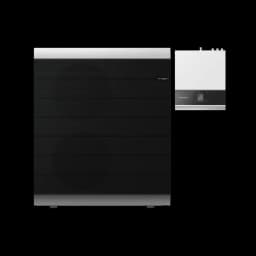
Heat pump system extension in an existing house: when it pays off, what to watch for, and how the extension becomes a stable, economical system.
Extending the mechanical systems of an existing house rarely starts with a clean slate. There is a working boiler, the radiators or underfloor heating are already in place, the plant room is often cramped, and the owner rightly expects the transition not to be an experiment. A heat pump system extension in an existing house is therefore not a simple product purchase, but a technical decision: the goal is for the system to genuinely reduce operating costs while running predictably and reliably.
The good news is that for most family houses, the question is not whether the system can be extended, but how it should be done. A modern air-to-water or geothermal heat pump can in many cases be integrated into existing heating circuits, but the optimal solution always depends on the building's heat demand, the heat emitters, the electrical capacity and the usage habits.
When is a heat pump system extension justified in an existing house?
The most common situation is when the house currently runs on gas, mixed fuel or electric heating, but the owner wants to reduce energy bills and lessen energy dependence. In this case, the heat pump does not necessarily appear as a full system replacement. It often first enters the house as a hybrid solution, or is installed alongside an existing system so that it takes over a significant part of the heating duty in the most favourable operating ranges.
Another typical case is when the house undergoes renovation. After new windows and doors, facade insulation or roof insulation, the building's heat loss decreases, so the previous heating system no longer operates at its best economy. That can be particularly good timing for a mechanical upgrade, because a modern heat pump system can be matched better to the reduced heat demand.
It is also common that the goal of the extension is not only heating. Many owners want to solve summer cooling with a single, energy-efficient system as well. With fan coil units or a suitable configuration, the heat pump can offer a serious advantage here too.
The first question is not the unit, but the building
The biggest mistake is when the investment starts with the unit's output. The building must be understood first. What is the real heat demand? What flow temperature do the existing radiators require? Is there underfloor heating, or only higher-temperature heat emitters? How much electrical capacity is available? Without these, even the most expensive equipment will not deliver good results.
In an existing house, a precise survey is especially important, because many things can look workable on paper, yet in practice it turns out that without reworking the hydraulic circuits, adding a buffer tank, rethinking domestic hot water production or expanding the electrical network, the system will not deliver what is expected of it.
The engineering mindset translates into a direct financial advantage here. Correct sizing prevents undersizing, where the system cannot maintain comfort in cold weather, and also oversizing, where the investment is unjustifiably expensive and the unit operates in unfavourable conditions.
What system extension paths are worth considering?
The simplest solution is when the heat pump connects to a low-temperature system that is already favourable. With underfloor heating or large-surface heat emitters, this can often be achieved at genuinely good efficiency. In that case, the extension can pay back faster, because the system is fundamentally suited to heat pump operation.
With radiator-heated houses, the situation is more nuanced. Not every radiator system is problematic, but it must be examined what flow water temperature is needed to maintain the desired indoor temperature. If the existing radiators are too small, partial replacement, supplementary heat emitters or fan coils may be needed. That is an additional investment, but in the long run it can significantly improve the system's economy.
There are also cases where the heat pump does not fully replace the existing heat generator. In a hybrid system, the heat pump handles the heating for most of the year, and the boiler only steps in at peak loads or extreme outdoor temperatures. For many renovations, this is a realistic and safe transitional strategy, especially when a complete mechanical overhaul is not justified all at once or does not fit into the budget.
What should you watch for in the conditions of an existing house?
The success of a system extension is often decided not by the heat pump itself, but by the related conditions. One of these is the electrical network. In many older properties, the current connection capacity is not sufficient for the planned system, so a network upgrade may be necessary. This matters in both time and cost, so it is worth clarifying at the start of the project.
The other key question is the mechanical integration. Where will the indoor unit, the buffer tank, the domestic hot water tank, and any manifold or hydraulic separator go? In an existing house, every square metre counts. A good plan is not only technically correct, but also practical in everyday use.
Noise protection and placement considerations cannot be sidestepped either. With an outdoor unit, it is important that the installation is not only compliant, but also conflict-free in the long term. A badly chosen location can cause frustration later, even if the unit itself is perfectly adequate.
How well does it pay back?
There is no single answer that holds for every house. The payback depends on the current energy costs, the available tariff, the house's heat demand, whether heat emitter replacement or electrical expansion is needed, and how the property is used. A well-sized system, however, creates value in two directions: it reduces operating costs and raises the technical standard of the property.
When evaluating the investment, it is not worth looking only at the current unit price. A cheaper but poorly matched system can cost more over its lifetime than a precisely designed, stably operating solution. Among the costs, the installation, any modifications, the controls, the electrical-side upgrades and future serviceability all count.
If a government incentive programme is available, it can improve the financial picture of the investment, but that does not make technical rationality secondary. It is not worth building even an incentive on a bad system.
The controls are at least as important as the unit
Many people evaluate the heat pump on its own, yet real performance comes from the whole system. Well-configured controls decide how often the unit starts, at what temperature it operates, how domestic hot water is produced, and when a supplementary heat generator switches on. This directly affects both consumption and lifespan.
In existing houses, handling zones is especially important. The living room, the bedroom or a converted attic space may each require a different temperature. If the controls do not manage this well, the system will either overheat or be uncomfortable. Modern control is therefore not an extra — it is part of economical operation.
Why does installation experience matter?
In a new build, the mechanical systems can be tailored to the design. In an existing house it happens the other way around: the system must be adapted to the reality of the building. That is why installation experience is a particularly great asset here. Someone who has seen many similar projects quickly recognises when a clever system connection is enough and when a deeper conversion is necessary.
In the Trident heat pump philosophy, this practical engineering approach is especially important: it is not enough to say what can be installed — it also has to be said what will still run stably, economically and predictably years from now. From the customer's perspective, that is what real security means.
This is how an extension becomes a long-term advantage
A heat pump system extension in an existing house is a good decision when it is not a makeshift substitution, but a conscious modernisation. That requires a precise survey, correct sizing, a heat emitter side matched to the building and well-thought-out controls. The best technical path is not the same for every house, but for almost every house there is a solution that improves comfort and reduces running costs.
The most important question, then, is not whether a heat pump fits into the existing system, but along what technical logic it should be integrated. If that decision rests on sound foundations from the start, the investment delivers not only more modern mechanical systems, but also calmer operation for the years ahead.
Let's talk about your options!
Ügyvezetőnk hétköznap 09:00–17:00 között elérhető.